
Microsoft investe em tecnologia de armazenamento duradouro de dados em vidro por 10 mil anos.
Revolutionizing Data Storage with Glass Technology
The unveiling of Microsoft’s Project Silica showcases a groundbreaking approach to long-term data storage using glass as its medium. By utilizing femtosecond lasers to encode terabytes of information into stable glass plates capable of lasting millennia without energy consumption when inactive, the innovative system marks a significant leap in data archiving technology.
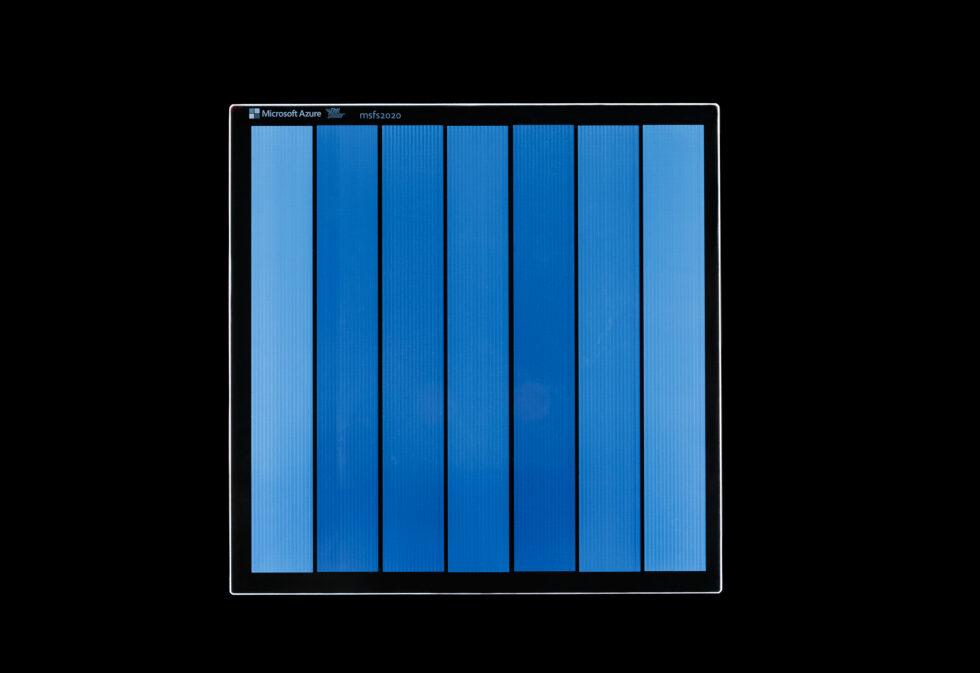
Through the creation of voxels within the glass, data density is increased significantly, with artificial intelligence employed for data retrieval. Despite its ability to store up to 4.84 TB per glass block and demonstrating durability exceeding 10,000 years, the slow writing process poses scalability challenges for handling vast amounts of data.
Traditional storage methods like magnetic tapes, hard drives, and servers are known for their energy consumption, wear and tear, and constant maintenance requirements. In light of this, researchers have been exploring unconventional solutions ranging from synthetic DNA to new physical materials, with Microsoft’s Project Silica emerging as a promising alternative.
Overall, while the potential for glass storage is evident, addressing the technical and economic hurdles of storing large volumes of data for decades or even centuries remains an ongoing challenge.
The Unique Properties of Glass for Data Preservation
Glass, often perceived as fragile, boasts exceptional stability from a chemical and thermal standpoint. Its resistance to moisture, temperature fluctuations, and electromagnetic interference makes it an ideal medium for archival storage. Within Project Silica, data is not merely etched onto the surface but engraved inside the glass using ultra-precise lasers, creating microscopic voxels that enhance data density.
The utilization of femtosecond lasers enables the encoding of multiple bits of information within individual voxels, elevating data storage efficiency. Moreover, the system employs advanced microscopy and convolutional neural networks for data retrieval, ensuring accuracy through error correction mechanisms akin to those used in 5G networks.
While each glass block can currently store up to 4.84 TB, the sluggish writing process, taking over 150 hours to fill a plate completely, presents a bottleneck to scalability. Nevertheless, accelerated aging tests indicate that borosilicate glass could maintain data integrity for over 10,000 years at room temperature, highlighting the potential longevity of this storage method.
As the volume of global data continues to surge, accommodating projects generating hundreds of petabytes annually would necessitate a significant infrastructure investment due to the requirement of numerous glass plates and parallel data processing systems.
Envisioning the Future of Archival Storage
With the ability to read data by detecting variations in the glass’s refractive index, combined with AI-powered image analysis for interpreting recorded patterns, the Project Silica marks a crucial step forward in data preservation technology. The utilization of neural networks trained to discern subtle visual discrepancies, including those influenced by neighboring voxels, enhances data retrieval precision.
Prior to data encoding, an error correction encoding process, similar to that found in 5G networks, enhances future data recovery reliability. Despite current limitations in writing speed, the Project Silica’s potential for durable, long-term data storage positions it as a candidate for archival solutions in the digital era.
In conclusion, while glass storage holds promise as a resilient archival medium, the growing data landscape necessitates continued innovation and scalability in overcoming the inherent challenges of storing vast amounts of data securely and durably.